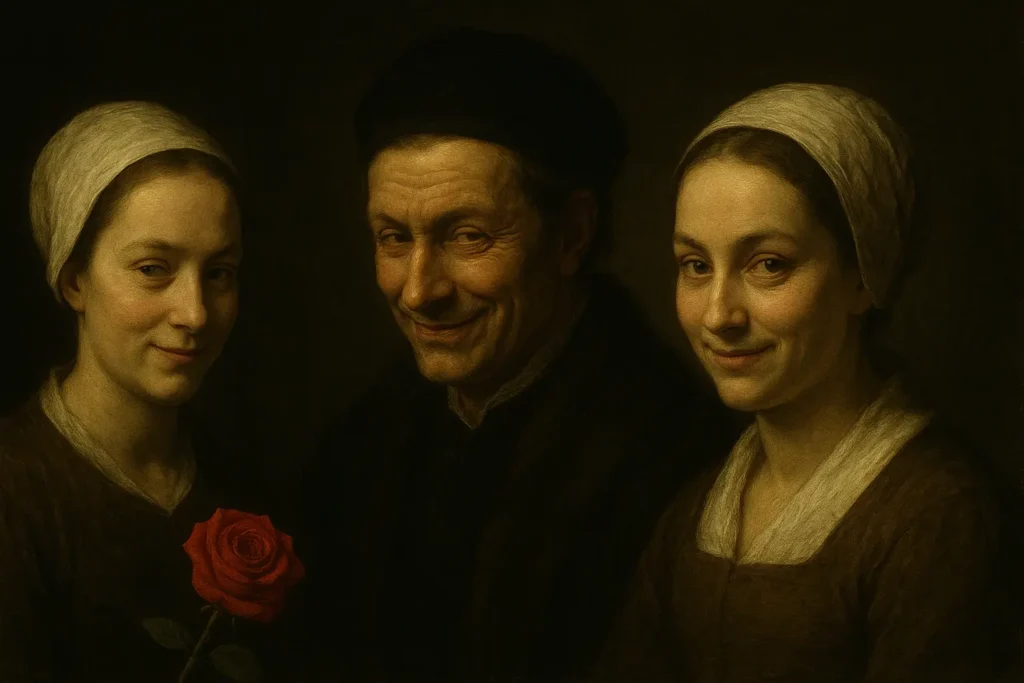
There is a modern ailment, and a most dreadful one it is, that one finds particularly odious: the overwhelming desire to be ‘good’. Everyone, it seems, wishes to be a moral paragon, a beacon of virtue, and a tiresome example to the rest of humanity. They parade their tedious kindnesses and their even more tedious integrity with an air of immense self-satisfaction. The truly fascinating thing about a virtuous man is not his virtue, which is quite dull, but his capacity for hypocrisy, which is endlessly entertaining.
A life dedicated to virtue is a life dedicated to tedium. It is a life lived in monochrome, a canvas painted with only the most predictable and unimaginative colors. Vice, on the other hand, is the soul of wit. It is the mother of invention, the sister of beauty, and the constant, delightful companion of the truly interesting. A man who has never been tempted is a man who has never been alive. He has not tested the limits of his imagination, nor has he pushed the boundaries of his own character. One finds oneself quite bored in the presence of a man who claims to have led a spotless life. His history is a list of omissions, a diary of the things he chose not to do, rather than a thrilling record of what he dared to create.
The Aesthete’s Dilemma, Goodness Versus Beauty and Art
One should not strive to be a good person, for goodness is merely the polite name we give to a profound lack of imagination. One should strive to be a beautiful person—one who lives with such grace and such disregard for convention that one’s very existence becomes a work of beauty and art. The saint is a fine subject for a sermon, but the sinner is a far more compelling subject for a story. And stories, as we know, are the only things that truly matter. The moral life is a life of rules, a rigid structure that allows no room for the exquisite improvisation that is the very essence of creation. The artistic life, conversely, is a life of glorious indiscretions, where every error, every transgression, every flirtation with the forbidden, is a new brushstroke on the canvas of one’s being. To live for beauty and art is to acknowledge that the world is a stage, and we are not merely its actors, but its most brilliant and stylish performers.
A life lived for the sake of goodness is a life lived in constant self-denial, a slow, agonizing process of becoming less oneself, all in the vain pursuit of an ideal that is both impossible and aesthetically displeasing. It is a life of subtraction. But a life lived in pursuit of vice, of beauty, and of wit, is a life of addition—one of new experiences, new sensations, new knowledge. The most fascinating people are not those who have resisted temptation, but those who have embraced it and lived to tell the tale, with an air of exquisite nonchalance. It is in the shadows and the forbidden that the soul learns its most profound lessons and the imagination takes flight. The very moral constraints that the virtuous cling to are the chains that prevent the rest of us from dancing.
The Vexation of Virtue, a Core Tenet
This is, in essence, the very heart of me on living. For what is life, if not the greatest work of art we will ever create? And who would ever choose to paint a masterpiece using only a single, dreary color and a rigid, uninspired line? The man who seeks to be good is merely seeking to conform, to make himself a palatable and predictable part of a tedious whole. But the man who seeks to be beautiful is a true individual, a brilliant and solitary star. The vexation of virtue lies in its profound lack of aesthetic merit. It produces no great poets, no grand romantics, and no truly magnificent personalities, only monuments of dullness. Let us, therefore, be a little less good and a great deal more beautiful. We are not meant to be moral lessons for the masses; we are meant to be captivating fictions for the discerning few. The true triumph is not in being remembered for one’s flawless character, but for one’s flawless style.
Leave a Reply