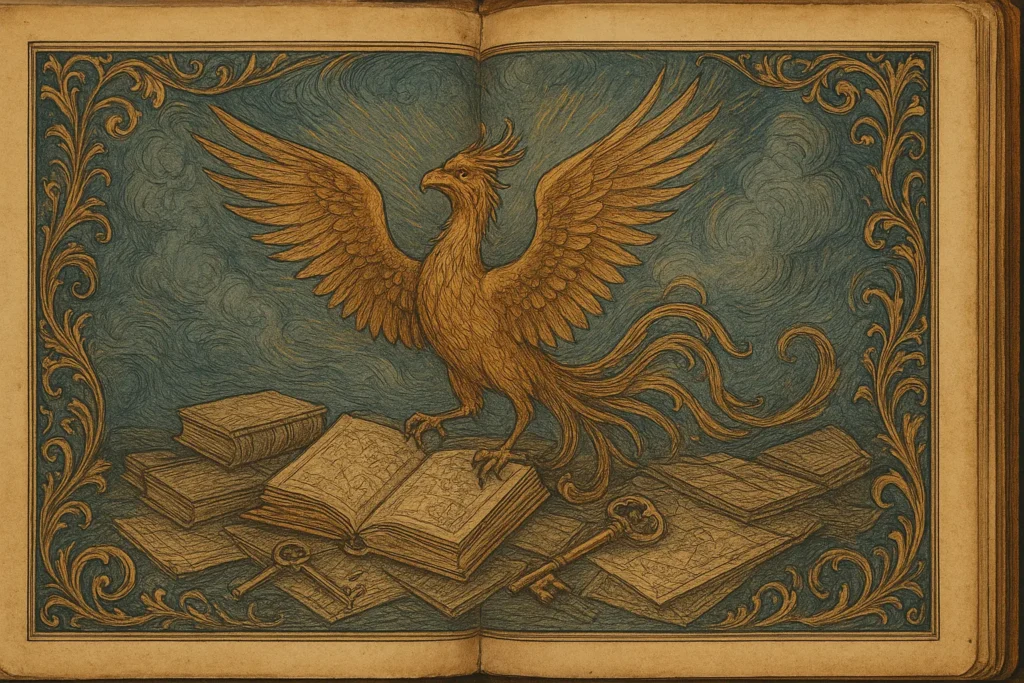
It is a lamentable contemporary superstition that one must ‘live’ in order to write, or to create, or even to speak with any authority. We are besieged by the memoirs of those who have done little but suffer, and the art of those who insist on boring us with the banal details of their existence. The result is a world filled with art that feels less like a dream and more like a dreary court deposition. Experience is a rather overrated form of education. It teaches one to accept the world as it is, with all its vulgarities and its painful truths. But the true artist, the true dandy, the true man of the world, must never accept the world as it is. He must see it not for what it is, but for what it might be, what it ought to be—what, with a little imagination and a great deal of style, it can be remade to be. Experience is the great enemy of imagination. It tells us that we cannot fly because we have never flown, that we cannot be beautiful because we have never been so, that the world is a miserable place because, for some, it has been. It is a form of intellectual and aesthetic paralysis, binding the soul to the dreary facts of a life lived.
The Tyranny of the Real, On the Inadequacy of a Life Lived
What one needs to create, or to live magnificently, is not more experience, but less of it. What one requires is not the memory of a tiresome past, but the glorious amnesia of the present, and the beautiful anticipation of a future one has not yet invented. The most profound truths are not those we learn, but those we make up. The mind that is a mere archive of a lived life is a library of worn and dusty books. It contains only what has already been. But the mind of imagination is a grand cathedral of possibility, where every truth is an invention and every fiction is a triumph. The artist who relies solely on his ‘experience’ is like a chef who only cooks with the ingredients he has found on his doorstep. The true culinary master invents new flavours from ingredients he has only dreamed of. Likewise, the great writer does not transcribe the world he has seen but invents the world he wishes to see. The beauty and art of creation do not lie in the faithful representation of a drab reality, but in the exquisite lie of a more beautiful one. It is a rebellion against the uninspired plot of our own existence.
The Tedium of Experience
The glorification of experience is, in a way, a subtle form of intellectual laziness. It is the belief that one’s own life, in its raw and unembellished state, is inherently interesting enough to be a subject of art. But nothing could be further from the truth. A life, without imagination, is merely a collection of facts, and facts are, by their very nature, the most tedious things in the world. This, of course, is a central tenet of Oscar Wilde’s philosophy on creation and life. To me, a truly elegant existence is not a document of a past lived but a work of beauty and art created in the present. The man who is defined by his experience is a prisoner of his past; he has ceased to grow and has surrendered his most precious asset—his capacity for invention—to the tyranny of what is. The world is quite real enough as it is. Let us add a little more illusion, and make it more interesting for everyone. It is in the glorious disregard for what has been that one finds the freedom to create what will be. One’s past is merely a foundation, not a blueprint. It is our duty, and indeed our pleasure, to tear up the tedious plans and build something entirely new, something fantastical and without precedent. What one requires for a magnificent life is not a well-documented history, but a glorious, self-invented present, lived in a constant state of beautiful anticipation. We should be the playwrights, not the mere actors, in the drama of our own lives. To be guided by the ghosts of our past experiences is to surrender the thrilling ambiguity of the future. Let us, therefore, not be defined by what we have lived, but by what we have imagined. For the only authority worth having is that which comes not from a long list of endured events, but from the singular, exquisite power of the human imagination.


Leave a Reply